
Our services
Commercial Leasing in Maitland & The Hunter Valley
Signing a commercial or retail lease in NSW? Hills Solicitors review leases for tenants and landlords, covering the Retail Leases Act, make-good, guarantees and more.
A commercial or retail lease is one of the biggest financial commitments a business will make, often running for five years or more and tying you to obligations worth hundreds of thousands of dollars. Yet many business owners sign leases without fully understanding what they’re agreeing to. Whether you’re a tenant taking on premises or a landlord protecting your investment, having a solicitor review the lease before you sign can save you from costly and stressful problems down the track.
At Hills Solicitors, we’ve been advising Maitland and Hunter Valley businesses and property owners on commercial and retail leasing since 1894. We draft, review, and negotiate leases, advise on your rights and obligations, and act for both tenants and landlords across the region.
*Book a consultation* or call (02) 4933 5111 to have your lease reviewed by an experienced solicitor.

Retail Lease or Commercial Lease? Why the Difference Matters
People often use “commercial lease” and “retail lease” interchangeably, but in NSW they are treated very differently under the law, and knowing which one applies to you is essential.
The key is the Retail Leases Act 1994 (NSW). This Act applies to most retail shop leases where the premises are used for a business listed in the Act (such as shops, cafes, hairdressers, and many service businesses) and are generally under 1,000 square metres. When the Act applies, it gives tenants a range of important protections, including:
- A disclosure statement that the landlord must provide at least seven days before the lease is entered into, setting out key financial details like rent, outgoings, and the term.
- A minimum five-year term (including any options), unless the tenant obtains a certificate from a lawyer or conveyancer under section 16 waiving this right.
- Restrictions on passing certain costs on to the tenant, such as the landlord’s legal costs of preparing the lease.
- Access to a low-cost mediation process through the NSW Small Business Commissioner for retail tenancy disputes.
If the Act does not apply (for example, an office, a warehouse, an industrial unit, or premises over 1,000 square metres), the lease is a general commercial lease. In that case, there are far fewer statutory protections, and your rights depend almost entirely on the terms negotiated in the lease itself. This is exactly why having a commercial lease reviewed before signing is so important: with a non-retail lease, the written terms are essentially all you have.
| | Retail lease | Commercial (non-retail) lease |
|---|---|---|
| Governing law | Retail Leases Act 1994 (NSW) applies | No specific Act; governed by the lease terms and general law |
| Typical premises | Shops, cafes, hairdressers and many service businesses, generally under 1,000 sqm | Offices, warehouses, industrial units, or premises over 1,000 sqm |
| Disclosure statement | Landlord must provide at least 7 days before the lease | Not required |
| Minimum term | 5-year minimum (including options) unless waived by a section 16 certificate | No statutory minimum; whatever is negotiated |
| Dispute resolution | Low-cost mediation via the NSW Small Business Commissioner | Negotiation, then court or tribunal |
| Tenant protections | Statutory protections under the Act | Depend almost entirely on the negotiated terms |
The Lease Terms That Cause the Most Disputes
Most leasing problems stem from a handful of clauses that tenants either didn’t notice or didn’t fully understand when they signed. These are the terms we pay closest attention to when reviewing a lease. For a tenant-focused walkthrough, see our guide to the 10 commercial lease traps every tenant should check.
Personal Guarantees
Many leases require the directors of a tenant company to personally guarantee the lease. This means that if the business fails, the landlord can pursue your personal assets, including your home, to recover unpaid rent and other losses. We advise on the risk, and where possible negotiate to limit or remove personal guarantees, or cap the tenant’s exposure.
Make-Good Obligations
A make-good clause requires the tenant to return the premises to a specified condition at the end of the lease. Depending on how it’s worded, this can mean stripping out fit-outs, repainting, replacing flooring, or restoring the premises to base building condition, which can cost tens of thousands of dollars. We check exactly what you’re committing to and negotiate fairer terms where the clause is unreasonable.
Rent Reviews
Leases typically include a mechanism for increasing rent over the term, whether by a fixed percentage, in line with CPI, or to “market”. Market rent reviews in particular can produce unexpected increases. We make sure you understand how and when your rent can rise and that the review mechanism is fair.
Outgoings
Outgoings are the property expenses (council rates, water rates, insurance, strata levies, and management costs) that the landlord may seek to pass on to the tenant. We check which outgoings you’re liable for and ensure they’re properly defined, as poorly drafted outgoings clauses can leave tenants paying more than they expected.
Permitted Use
The lease will specify what the premises can be used for. If the permitted use is drafted too narrowly, it can restrict how you operate or grow your business. It’s also essential to confirm that your intended use is actually allowed under the relevant council zoning before you commit.
Assignment, Subletting, and Options to Renew
If you might want to sell your business or move on before the lease ends, the assignment clause (which governs transferring the lease to a new tenant) becomes critical. An option to renew gives you the right to extend the lease for a further term, providing security for your business. We make sure these provisions protect your flexibility.
Commercial Leasing for Tenants
As a tenant, the lease you sign shapes your business’s costs, security, and flexibility for years. We help tenants understand exactly what they’re agreeing to before they commit, negotiate fairer terms, and avoid the traps that catch out unrepresented businesses. Our services for tenants include reviewing and explaining the lease in plain language, negotiating with the landlord or their agent, advising on personal guarantees and make-good obligations, and acting on lease renewals, assignments, and disputes.
Commercial Leasing for Landlords
As a landlord, your lease is the document that protects your investment and secures your rental income. We help landlords put in place well-drafted leases that comply with the law, protect the property, and minimise the risk of disputes. Our services for landlords include preparing leases and disclosure statements that comply with the Retail Leases Act where it applies, advising on appropriate security (such as bank guarantees and personal guarantees), drafting clear rent review and outgoings provisions, and acting on rent recovery, breaches, and end-of-lease disputes.
When a Leasing Dispute Arises
Even with a well-drafted lease, disputes sometimes happen, whether over rent, repairs, make-good, or a claimed breach. For retail leases, many disputes must first go through mediation via the NSW Small Business Commissioner before court proceedings can begin. We advise on your position, represent you in negotiations and mediation, and if the matter can’t be resolved, our commercial litigation team can act for you in the appropriate court or tribunal.
Why Choose Hills Solicitors
- Local knowledge since 1894: We understand the Hunter Valley commercial property market, local landlords and agents, and the practical realities of leasing in a regional centre.
- We act for both sides: Because we act for both tenants and landlords, we understand what fair, workable lease terms look like from both perspectives.
- A full-service firm: We handle leasing alongside business law, business sales, and litigation, so we can support you across every stage of your business.
- Clear, fixed-fee options: For many lease reviews we can offer a fixed fee, so you know the cost upfront.
Frequently asked questions about commercial and retail leasing
The distinction in NSW comes down to whether the Retail Leases Act 1994 applies. The Act generally applies to premises under 1,000 square metres used for a retail business listed in the Act (such as shops and many service businesses), giving tenants protections like a disclosure statement and a minimum five-year term. If the Act doesn’t apply (for example, offices, warehouses, or larger premises), it’s a general commercial lease with fewer statutory protections, where your rights depend on the negotiated terms.
It’s strongly recommended. A commercial lease is a long-term, legally binding commitment often worth hundreds of thousands of dollars over its term. A solicitor identifies unfavourable terms (like personal guarantees and costly make-good obligations), explains your obligations, and negotiates fairer terms before you’re locked in. The cost of a review is small compared to the cost of a problem discovered later.
A make-good clause requires the tenant to return the premises to a specified condition at the end of the lease. Depending on the wording, this can range from simple cleaning through to stripping out fit-outs and restoring the premises to base building condition, which can be very expensive. It’s essential to understand your make-good obligations before signing, as they can create a significant unexpected cost at the end of the lease.
Under the Retail Leases Act 1994, a landlord must give a retail tenant a disclosure statement at least seven days before the lease is entered into. It sets out key financial and practical details of the lease, including the rent, outgoings, term, and any other significant matters, so the tenant can make an informed decision. Failure to provide a proper disclosure statement can give the tenant certain rights, including in some cases the right to terminate.
It depends on the terms of your lease. Some leases include a break clause allowing early termination in certain circumstances, but many don’t. Common options include assigning the lease to a new tenant (with the landlord’s consent), subletting, or negotiating a surrender with the landlord. Leaving without a proper exit can expose you to significant liability for the remaining rent, so it’s important to get advice before taking any action.
A personal guarantee makes the individual directors of a tenant company personally responsible for the lease obligations. If the business can’t pay, the landlord can pursue the guarantor’s personal assets, including their home. Personal guarantees are common but negotiable. We advise tenants on the risk and, where possible, work to limit or remove them.
Yes. We act for both commercial and retail tenants and for landlords across Maitland and the Hunter Valley, including East Maitland, Rutherford, Thornton, Kurri Kurri, Cessnock, and the broader Newcastle region. Acting for both sides means we understand what fair and workable lease terms look like from every perspective.
Have Your Commercial Lease Reviewed Before You Sign
Whether you’re a tenant about to commit to premises or a landlord protecting your investment, the terms of your lease matter enormously. The best time to get advice is before you sign, when terms can still be negotiated, not after a problem has arisen.
Hills Solicitors has been advising Hunter Valley businesses and property owners on commercial and retail leasing since 1894. We’ll explain your lease in plain language, flag the risks, and negotiate the terms that protect you.
*Book a consultation with our leasing team today, or call us on (02) 4933 5111. Check our FAQ page* if you have any questions.
Passionate, experienced solicitors
Meet the team at Hills
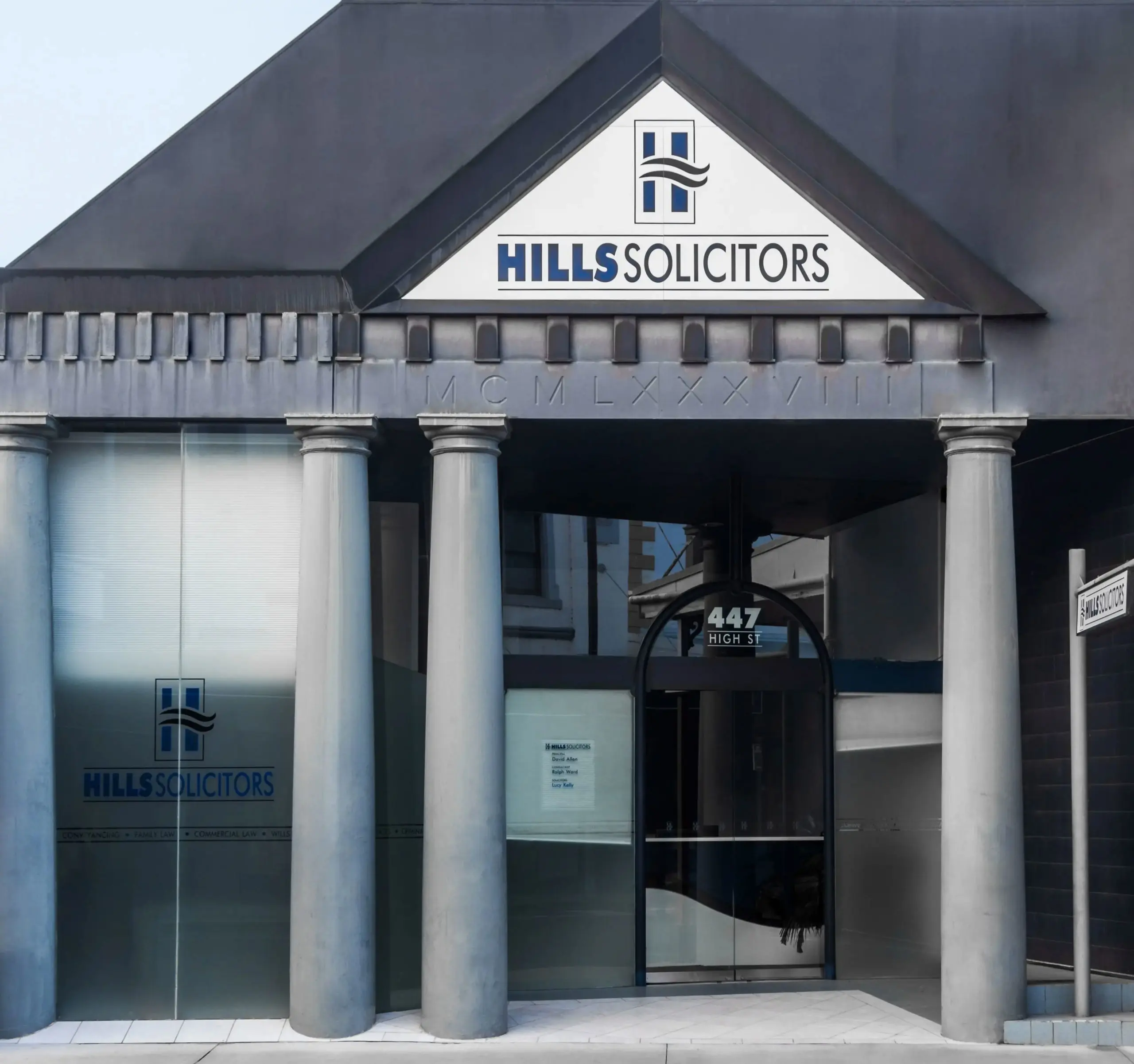
Hills Solicitors first opened its doors in September of 1894 under the name T A Hill. We continued strengthening our roots in the Maitland community and later became T A Hill & Son, when our founder's son joined the family practice. We then made the change to Hills Solicitors.
We have had a total of 3 offices since those early days in 1894, all of which are a 50m walk from our current office.
Get in touch today to see how Hills can help
When you approach Hills Solicitors for any legal advice, we treat you like family. Our valuable clients are members of an evergrowing family that we wouldn't be here without.

Getting started
How we work with you
At Hills Solicitors, we take pride in our over 130 years of experience and adaptability. Our clients can trust that we will continuously evolve and tailor our services to their changing needs.
Step one
Get to know each other
When you come to Hills for advice you are never just another client to us, you become part of our large family and it is vital we get to know you.
Step two
Understanding your rights
The first step is to help you understand your rights and how you can approach the issues at hand.
Step three
Determining your goals
The most important step is understanding exactly what you would like to see at the end of your matter.
Got questions?
We're here to help
The team at Hills are here to help with all of your legal needs, serving Maitland and the Hunter for over 130 years. With a forward-thinking approach, providing practical solutions, for an affordable price. We're here to help you when you need us.